
The work begins on paper.
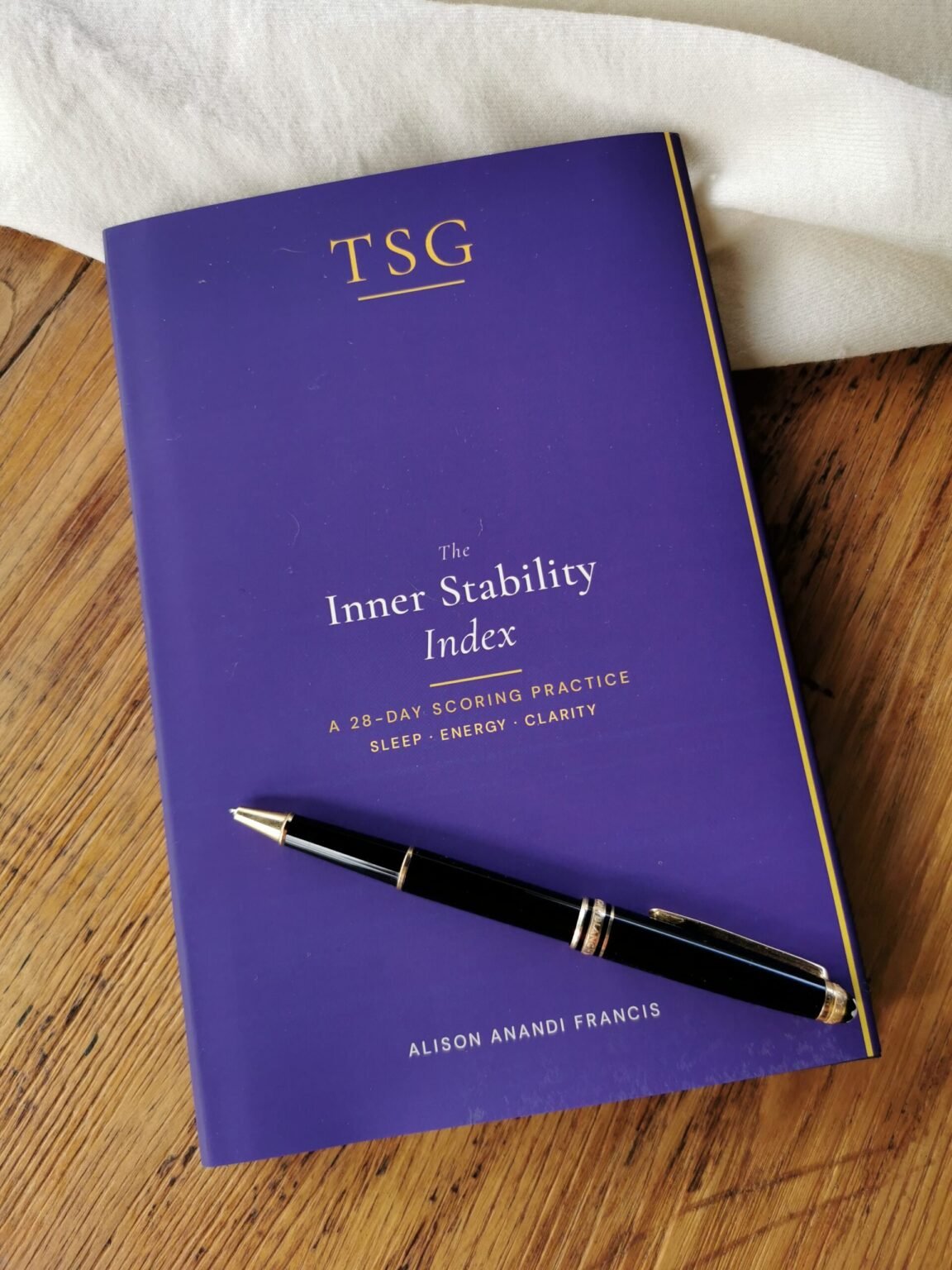
A daily scoring practice for people who function well on the outside and run on empty underneath. Six domains, scored each morning, looking at yesterday.
Sleep does not fail in the bedroom.
It fails in the hours before it, and in the days, weeks and months that built the pattern.
This is why the usual advice does so little for people like you. Cooler room, darker curtains, no screens after nine. All of it is reasonable, and all of it addresses the last ninety minutes of a day that was decided long before you walked upstairs.
By the time you are lying there at three in the morning, the cause is two days behind you.
You already sense this. You can tell the difference between a night that went wrong and a system that is running hot, and no amount of sleep hygiene has touched the second one. What you have not had is a way to see it. Not a feeling about it. A record, in your own handwriting, of what your system was actually doing on the days that preceded your worst nights and your best ones.
That is what this is.
It scores the day, not the night.
Most journals ask how you feel. This one asks what happened.
Five to ten minutes, once, in the morning. You read thirty short statements and mark each one: not present yesterday, present mildly, clearly present. You add your total, note how the night went, and write one adjustment for the day ahead. Then you close it.
There is no evening return. You are not asked to do this twice a day, because people do not, and a system that depends on being perfect fails in week one.
There is writing in it, kept deliberately short. A few lines each morning alongside the scoring. Enough to catch what the numbers cannot, and little enough that you will still be doing it in week four.
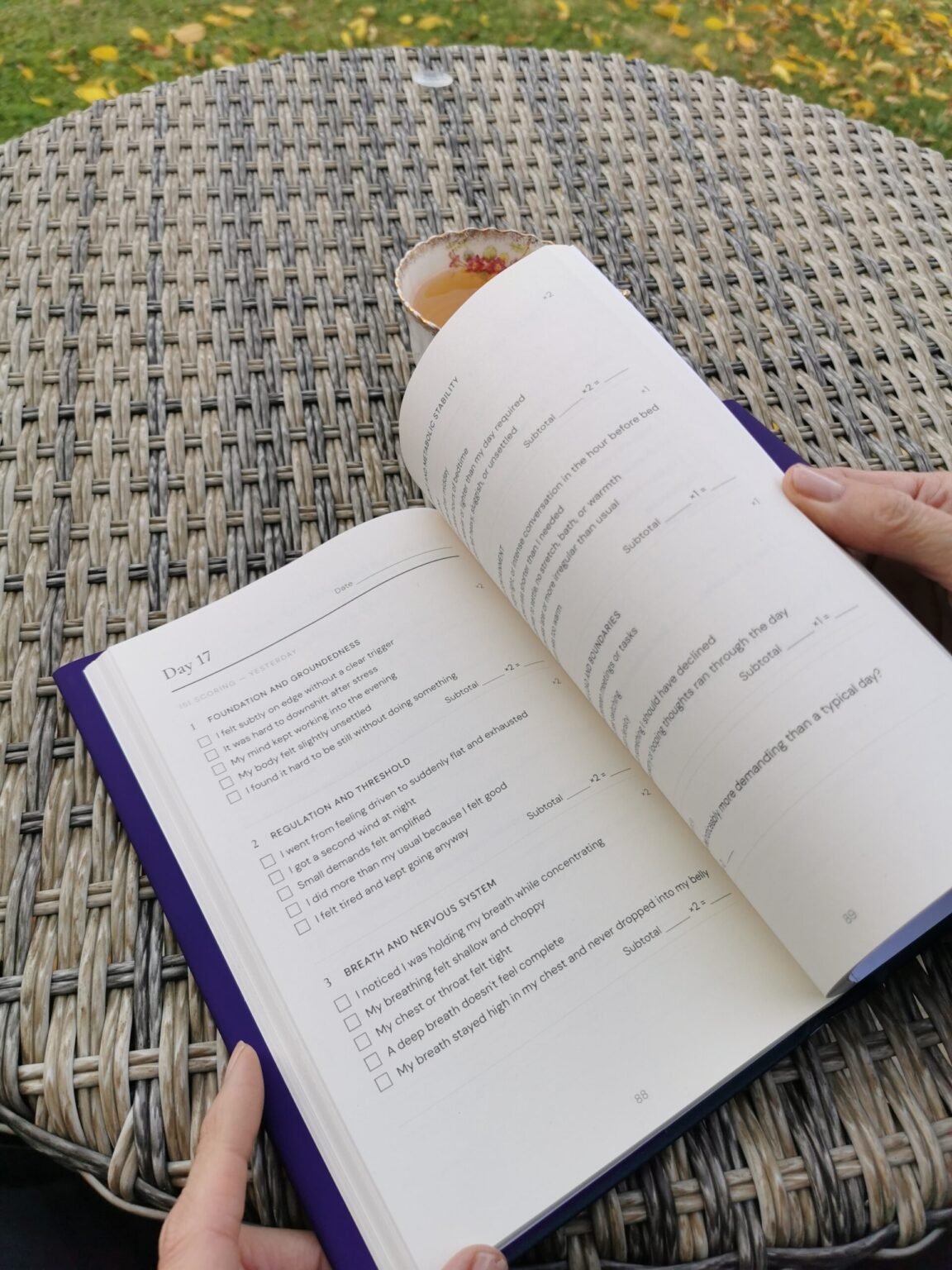
Six domains. Not all of them count equally.
Foundation and Groundedness
How settled you were during the day. A system that never came down will not come down at night just because the lights are off.
Regulation and Threshold
Whether you stayed inside the energy you actually had. The second wind, the push past tiredness, the day you did more because you felt good.
Breath and Nervous System
The only part of the stress response you can take hold of deliberately. It is also the part that changes shape first, hours before anything registers as pressure.
Nourishment and Metabolic Stability
Alcohol, caffeine timing, how late you ate. Falling asleep requires your core temperature to drop, and digestion keeps it up. Most people are asking the body to cool down and run a kitchen at the same time.
Evening Containment
How deliberately the day was closed, or whether it simply continued at a lower volume until you lay down.
Cognitive Load and Boundaries
What your mind was still carrying. Decision density, task switching, the thing you agreed to that you should have declined.
The first four carry double weight. They describe the state of the nervous system itself, and they act on sleep mechanically. The last two are conditions: they matter, and they are more within your control, but they sit on top of the foundation rather than forming it.
That weighting is the difference between a score that flatters you and a score that is useful.
A map of your own system, drawn by you.
Twenty-eight days is long enough for a pattern to appear and short enough that you will finish.
Most people find three things.
The lag
A high score in the first three domains tends to show up in your sleep twenty-four to forty-eight hours later. Cause and symptom are rarely on the same day, which is why looking at last night has never explained anything. Once you can see your own lag, a difficult night stops being random and starts being predictable, which means it also becomes preventable.
Your threshold
The point at which your system stops registering tiredness and starts running on stress hormones instead. Most people have been crossing it for years without noticing. In the scores it is visible before it is felt.
Your baseline
Some people find their numbers barely move, and their sleep stays unsettled whatever the day contained. That is the most significant finding the instrument produces, and the one most often mistaken for it not working. It means load that has built over months or years until it stopped being a reaction and became the resting state. It tells you the system needs more than a better day to settle.
By Day 28 you will have something almost nobody has, which is twenty-eight mornings of evidence about how your own system behaves under its own ordinary conditions.

A book built to sit on a bedside table for a month and survive it.
One hundred and fifty pages. Six by nine inches. Hardcover, wrapped in linen, with a printed dust jacket. Cream uncoated paper, because you will be writing on it every day and thin white stock makes that unpleasant.
Inside: the principle, the six domains explained, how to score, what to look for, then twenty-eight days laid out across four pages each. Two facing pages for the scoring, two for the morning reflection, so you are never writing across a gutter. A weekly tracker closes each week. A pattern map and a full review close the book.
It was made as an object you keep, not a pad you use up.
Twenty-eight mornings. Ten emails from me along the way.
Ten emails, included in the price, arriving across the four weeks. They begin when the book reaches you, and each one lands where your own data becomes readable, or where people tend to give up.
One in week one, when a few days of scores show nothing and that is exactly correct. One a fortnight in, walking you through finding your own lag in your own numbers. One in week four for anyone whose scores have barely moved. One before the final page, telling you to go back and read what you wrote before you began.
There is nothing further to sign up for and this is not a newsletter. Ten emails, then they stop.
You will recognise yourself or you will not.
You function. Work gets done, people rely on you, nobody looking at your week would say anything was wrong. Underneath it you are wired in a way that does not switch off, and tired in a way that sleep is not fixing.
You get a second wind at ten at night and mistake it for energy. You have tried the obvious things and some of the less obvious ones. You can push through almost anything, which is the skill that got you here and the one that is now costing you.
This is not for you if you want to be told what to do.
There is no protocol in this book. No supplement list, no routine to adopt, no four rules for better sleep. It is a measuring instrument, and it will show you things about yourself that you may not enjoy seeing. Twenty-eight mornings of honest scoring is a small commitment that most people do not keep.
If you want someone to hand you a solution, that is a different piece of work and it comes later. This is the part where you find out what you are actually dealing with.
I built the Inner Stability Index because I needed it and it did not exist.
I work with people whose sleep will not settle, and almost all of them arrive with the same problem. They know something is wrong and they cannot describe it with any precision. Nothing available measured what I needed to see. Sleep trackers record the result. Questionnaires ask how you have felt in general over the past month. Neither of them tells you what your system was doing on the Tuesday that produced the Thursday.
So I made an instrument that scores the day rather than the night, weighted towards the four things that act on sleep mechanically rather than the ones that merely surround it.
It has been through four revisions and a good deal of client use. This is the version I give my own clients.
Alison Anandi Francis

- 150 page hardcover, linen wrapped, with dust jacket
- Twenty-eight days of scoring across four pages each
- Weekly trackers, pattern map and full review
- Ten emails from Alison across the twenty-eight mornings, starting when the book arrives
Printed and dispatched on order. Allow eight to twelve days for delivery.
A map tells you where you are.
The journal shows you the pattern. It does not interpret it, and that distinction is the whole point.
A map does not tell you what to change first, because that requires reading your pattern against your physiology, your history and the way you work, and no book can do that. It is the difference between data and a reading of it.
That is the Inner Stability Diagnostic, and it is where this leads for people who want to go further. Twenty-eight days of your own data makes that work faster and more precise from the first hour, because we spend it interpreting rather than gathering.
It is not required, and nothing here depends on it. The journal is complete in itself.
- How long does it take each morning?
- Five to ten minutes, once. There is no evening session.
- What if I miss a day?
- Leave it blank and carry on. The pattern comes from the shape of the month, not from an unbroken run.
- Do I need a wearable?
- No. There is space to record HRV and night wakings if you use one, and the two sets of information sharpen each other. The instrument works without it.
- Is this for insomnia?
- It is for people whose sleep is unsettled, inconsistent, or broken in the small hours, and who function well enough that nobody has noticed. If you have a diagnosed sleep disorder, this will show you your daily pattern, but it does not replace medical care.
- When will it arrive?
- Each copy is printed when you order. Allow eight to twelve days, tracked. You will get a dispatch notice with tracking.
- Can I buy several?
- Yes. Add the quantity at checkout. If you want a dozen or more for a team, write to me first.
- What are the ten emails?
- Ten emails from me across the twenty-eight days, arriving at the points where your data becomes readable. They are included and they start when the book reaches you.