

HRV and Sleep
What HRV and Sleep Fragmentation Actually Reveal
Waking at 2am, 3am, or 4am night after night can feel almost programmed, precise, predictable, and frustrating. It’s one of the most common sleep complaints I hear. But when someone asks me why it’s happening, I rarely begin with the clock.
I begin with recovery.
Sleep isn’t just an event that happens at night. It’s the output of how your nervous system has regulated itself across the entire 24 hours before you closed your eyes.
Where I Start Instead
When someone tells me they wake at the same time every night, I don’t immediately reach for earlier bedtimes, supplements, or a stricter routine. Instead, I look at three markers: nighttime fragmentation patterns, heart rate variability during sleep, and daytime clarity. Together, these tell me far more than the time on a clock.
What HRV During Sleep Actually Reveals
Heart Rate Variability — HRV — is the variation in time between heartbeats. It reflects the balance of your autonomic nervous system. Higher HRV generally signals stronger parasympathetic tone, meaning your body has real capacity to rest and recover. Lower HRV can point to elevated physiological stress, poor recovery, alcohol impact, inflammation, emotional load, or metabolic strain.
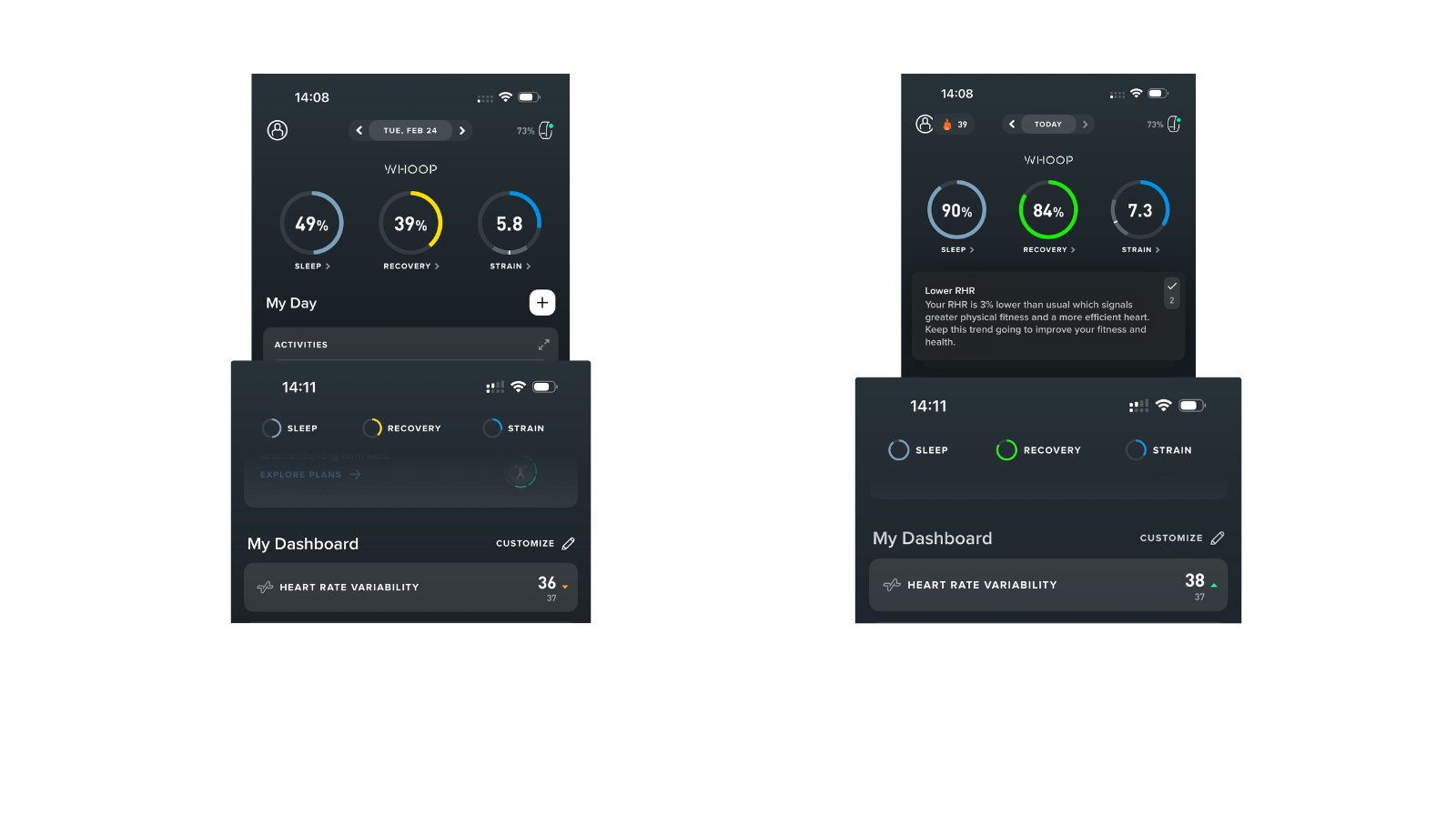
When we measure HRV during sleep, we’re assessing something deeper than sleep stages. We’re asking whether your system is truly shifting into recovery mode. You can be asleep for seven hours and still wake unrestored if HRV remains suppressed throughout the night. That distinction changes everything. You can see from the images below what happens to the HRV when the system is stressed and unable to wind down. See the stressed results on the left and the rested results on the right.
The Pattern Is What Matters
Waking at the same time each night isn’t automatically a disorder. Context is everything. Consistent 3am waking combined with suppressed HRV and afternoon brain fog suggests structural nervous system dysregulation. A brief waking with stable HRV and clear mornings is likely just normal sleep architecture. Night waking that follows alcohol use alongside an HRV dip points to a behavioural cause. And chronically low HRV in someone living a high-performance lifestyle often reveals a compensation pattern that’s been building quietly.
The question worth asking isn’t simply “why do I keep waking up?” It’s “what is my recovery capacity telling me?”
Daytime Clarity Is the Real Metric
This is where most sleep conversations miss the mark. Sleep quality isn’t about hours logged — it’s about cognitive precision, emotional steadiness, and sustainable energy throughout the day. If someone wakes briefly at night but feels mentally sharp by morning, I’m not concerned. If someone sleeps eight hours yet struggles with brain fog and low HRV trends, we investigate.
Daytime clarity is the true measure of whether sleep is doing its job.
Why This Keeps Happening
When HRV trends downward and nighttime awakenings increase together, it usually means the nervous system is struggling to fully power down — remaining slightly sympathetically activated when it should be at rest. Sleep fragmentation is rarely random. It reflects biological alignment, or the lack of it. And you don’t fix it by trying harder at bedtime. You stabilise the system that governs it.
So Is Waking at the Same Time a Problem?
Not necessarily. Circadian rhythms are precise, and brief awakenings are a normal part of sleep architecture. What determines whether waking becomes disruptive is the state of your autonomic balance, hormonal rhythm, recovery capacity, and overall lifestyle load. This is exactly why surface-level sleep hygiene so often fails — the issue isn’t discipline. It’s regulation.
If you’re waking at the same time each night, the most useful question isn’t “how do I stop this?” It’s “what is my recovery capacity showing me?” Because sleep is rarely the beginning of the problem. It’s the signal.

Why do I wake up every night at the same time?
Repeated waking at a consistent time can reflect circadian rhythm transitions. Whether it becomes disruptive depends on nervous system recovery and autonomic balance.
What is HRV sleep?
HRV sleep refers to measuring heart rate variability during sleep to assess nervous system recovery. It provides insight into how effectively the body shifts into restorative mode.
Is low heart rate variability during sleep bad?
Persistently low HRV may suggest elevated stress physiology or poor recovery. Trends over several weeks are more meaningful than a single reading.
Does sleep fragmentation mean insomnia?
Not necessarily. Sleep fragmentation can reflect physiological misalignment rather than a primary sleep disorder.
More info about the Sleep Diagnostic & Protocol